
Between the two major projects of the Interdisciplinary Project Lab course was an assignment aimed at helping students better understand the capabilities of CNC routers for fabrication. The sole expectation was to produce a desk lamp that used a potentiometer, a wooden base, and a custom PCB.
The first step, as always, was to find inspiration. While working on the paper lamp project, some of my earlier concepts explored user interaction. Now that the range of allowed materials had been expanded, I wanted to create a light fixture that users could control directly. After looking at a few desk lamp examples, I decided on a simple rotation-based design. The lamp would be controlled by turning a cylinder left or right to increase or decrease its brightness. As a bonus challenge, I wanted to see if I could include a humidifier element using a piezo disc.
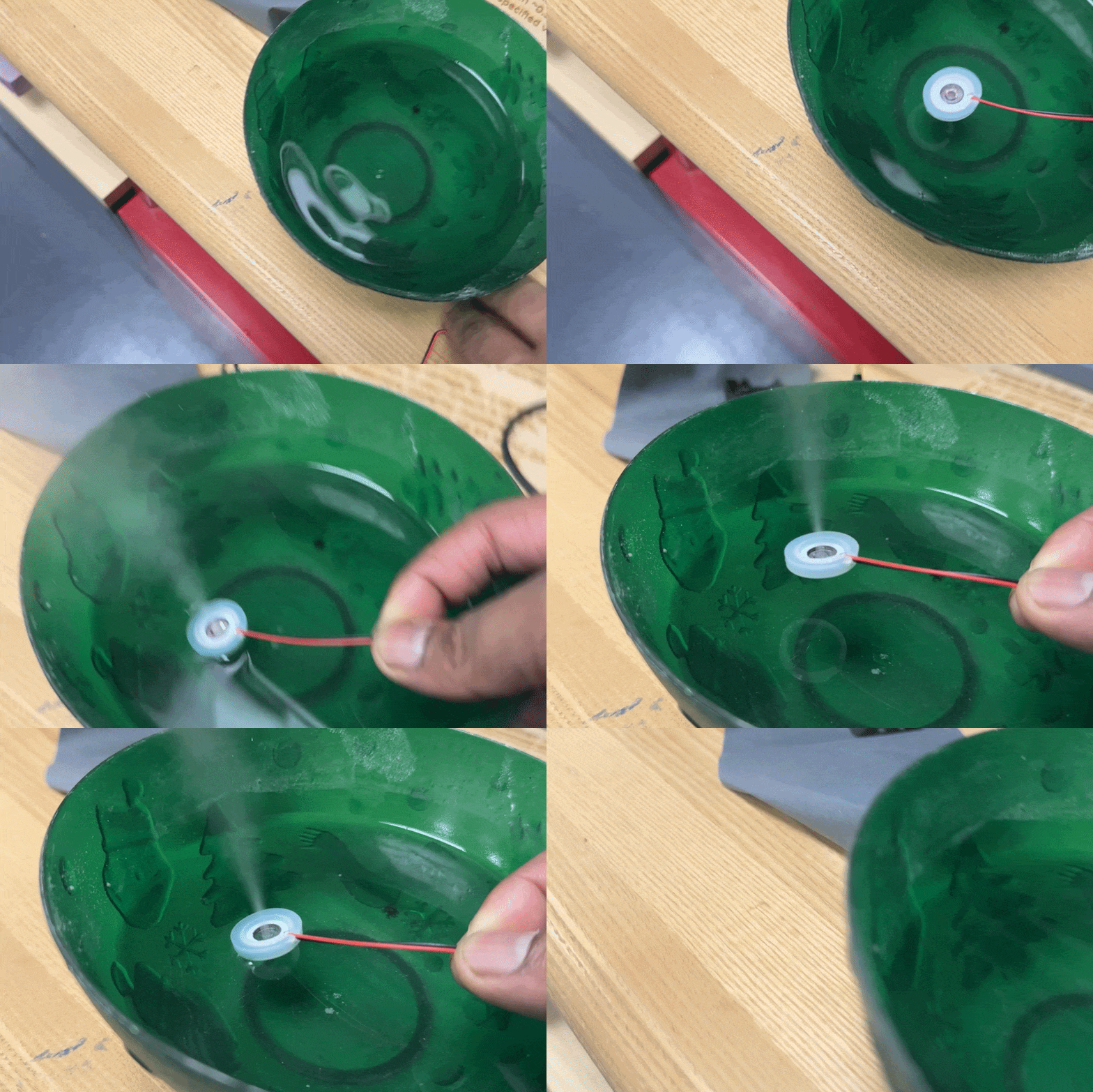
With the core concept in mind, I began drafting the idea on scrap paper and building the circuit on a breadboard. To make my design work, I created two PCBs that would sit on top of one another. The first would hold a limit switch that, when pressed, would turn the humidifier element on or off, and the second would hold the LEDs and potentiometer responsible for the illumination component.
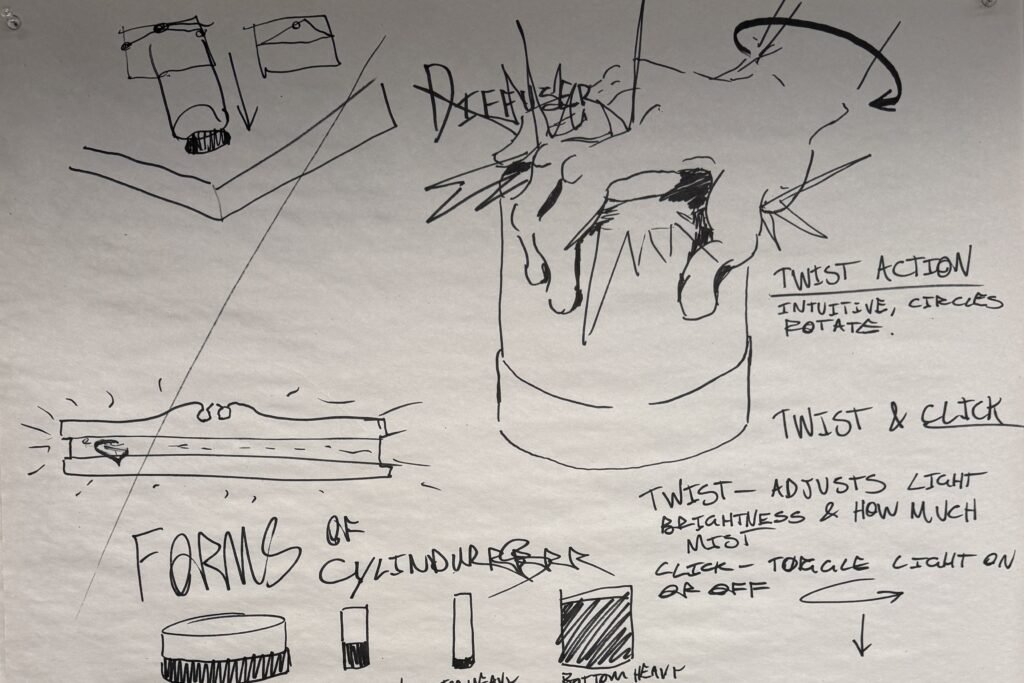
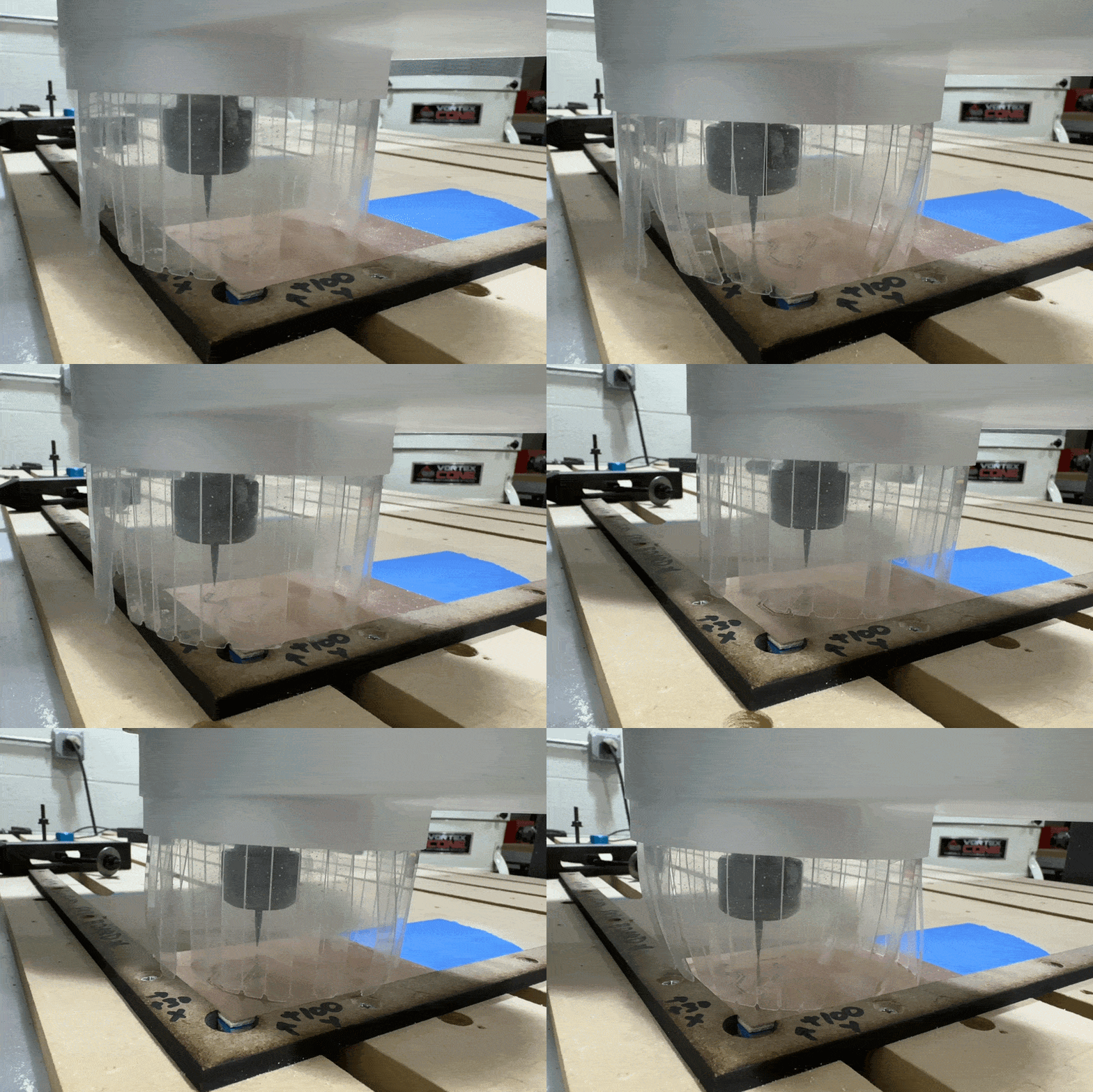
Once I was happy with my designs, I began digitizing them. The paths for the PCB and wooden base were designed in Adobe Illustrator, and the 3D printed lampshade was designed in Onshape. The paths were brought into VCarve Pro and cut on my university’s CNC.
Once I had all the parts, assembly was simple. The components were added to the board, and the wooden base was assembled. To finish things off, the cylindrical lampshade was glued to the potentiometer on the upper board.
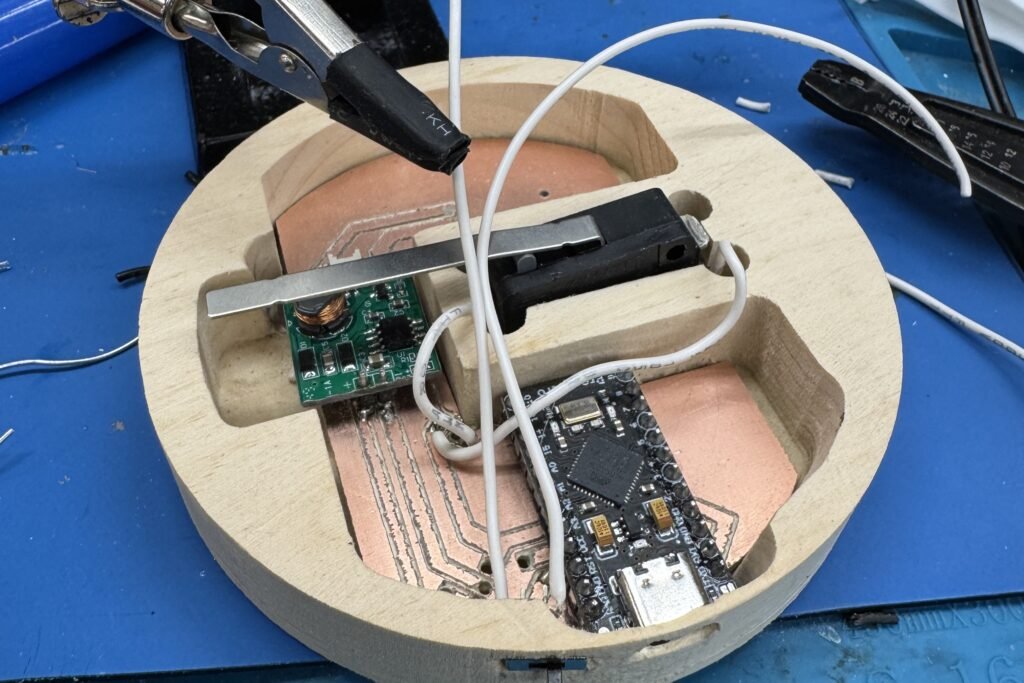
At this point, the humidifier idea was scrapped since it took too much force to press down on the limit switch. Given more time, channels could have been added to the inner walls of the wooden base’s sides to better focus the action.
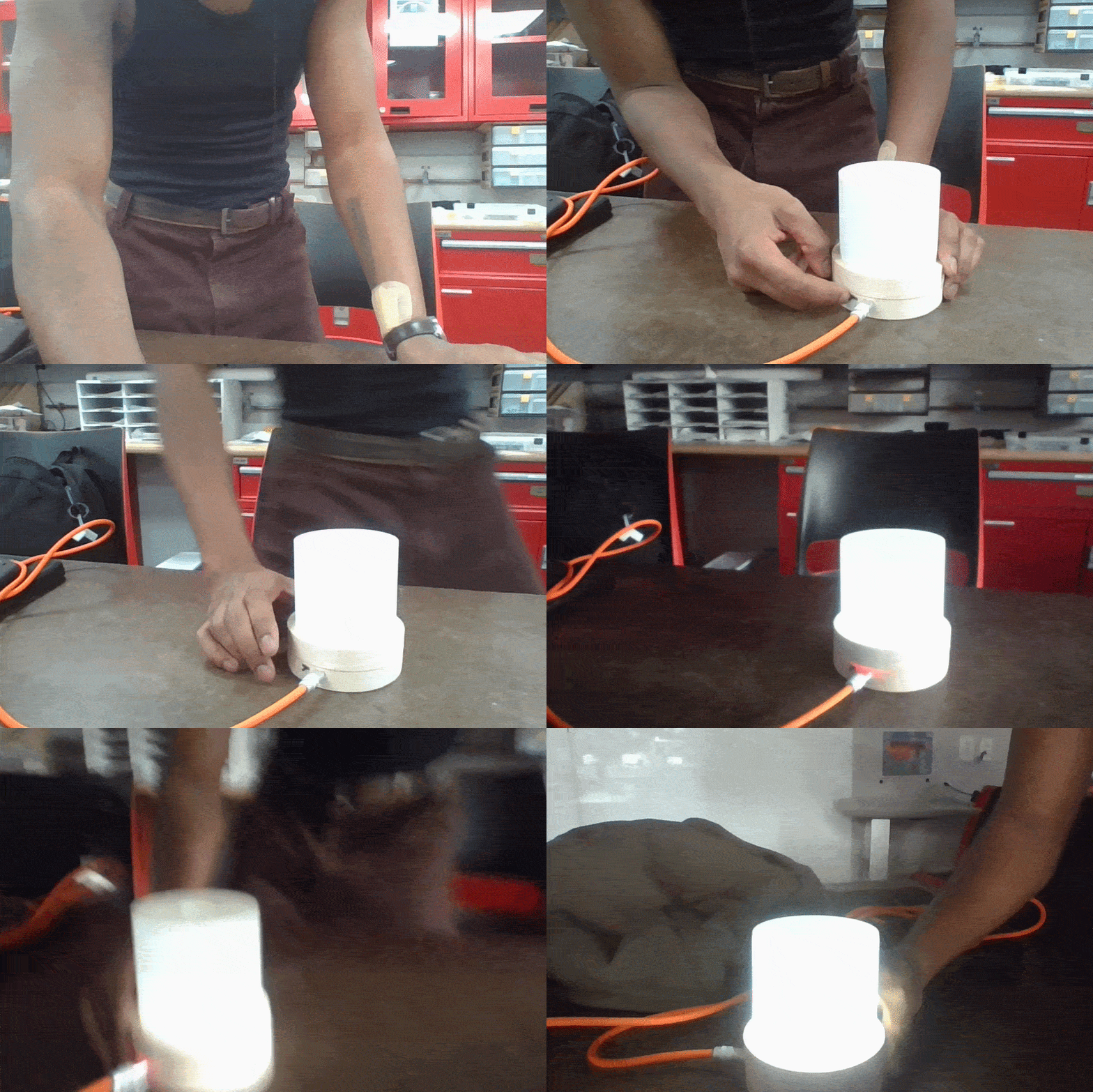
This assignment was designed to be completed in a short time to give students some exposure to additional fabrication methods in preparation for the final. I feel like I learned a lot from it, and I’m excited to explore more ways to use the CNC router in the future. The ability to make prepared designs for more people to use is extremely exciting.