
The final project for Interdisciplinary Project lab was to create a light fixture of our own choice. I ran through a bunch of different concepts, but in the end, I decided to base my final on one I found while looking for inspiration for the paper lampshade project. The Shylight is a light sculpture created by Studio Drift that uses a thin fabric skin attached to a motorized wire frame to open and close. The designers of the Shylight based the open and closing motions on blooming flowers.
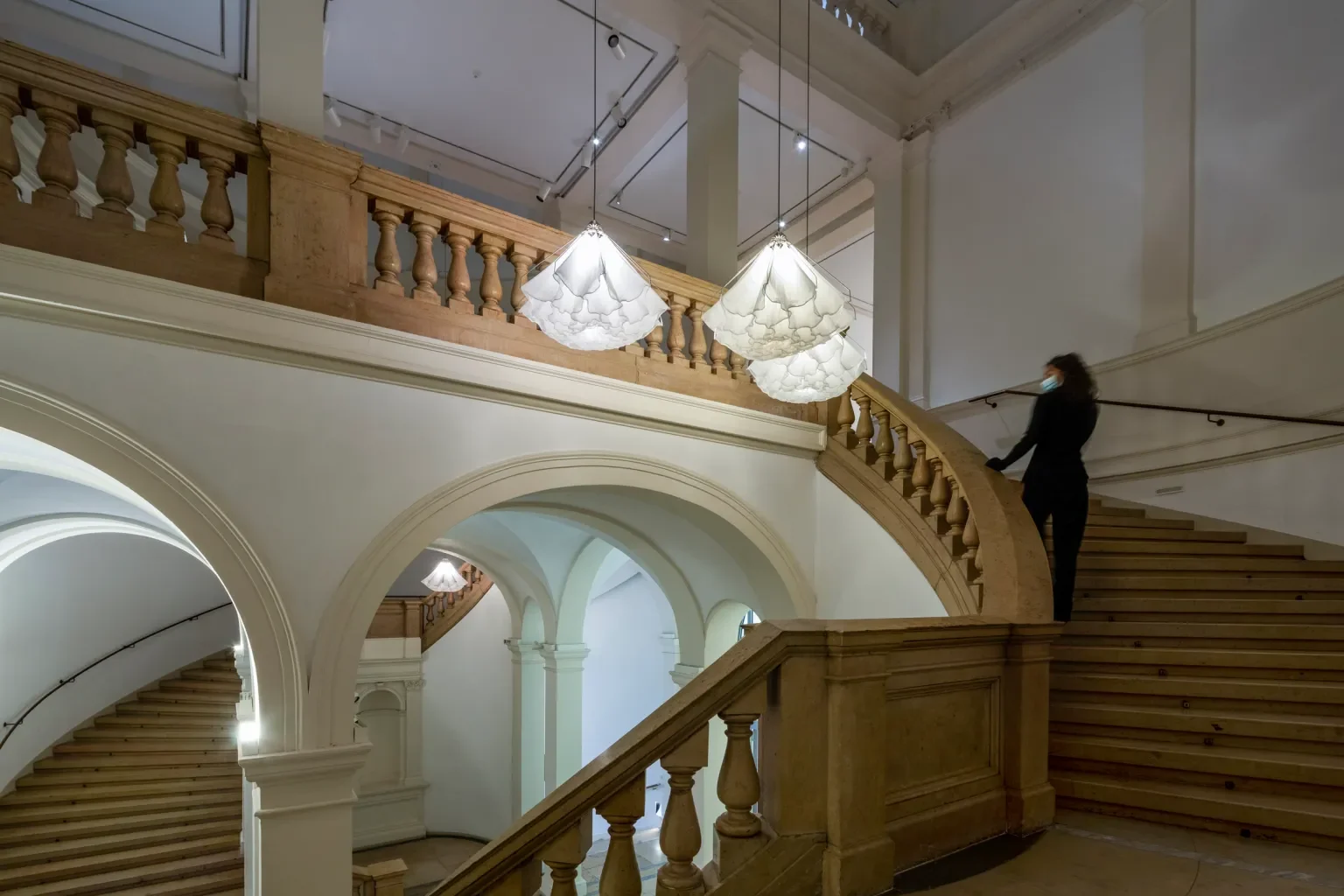
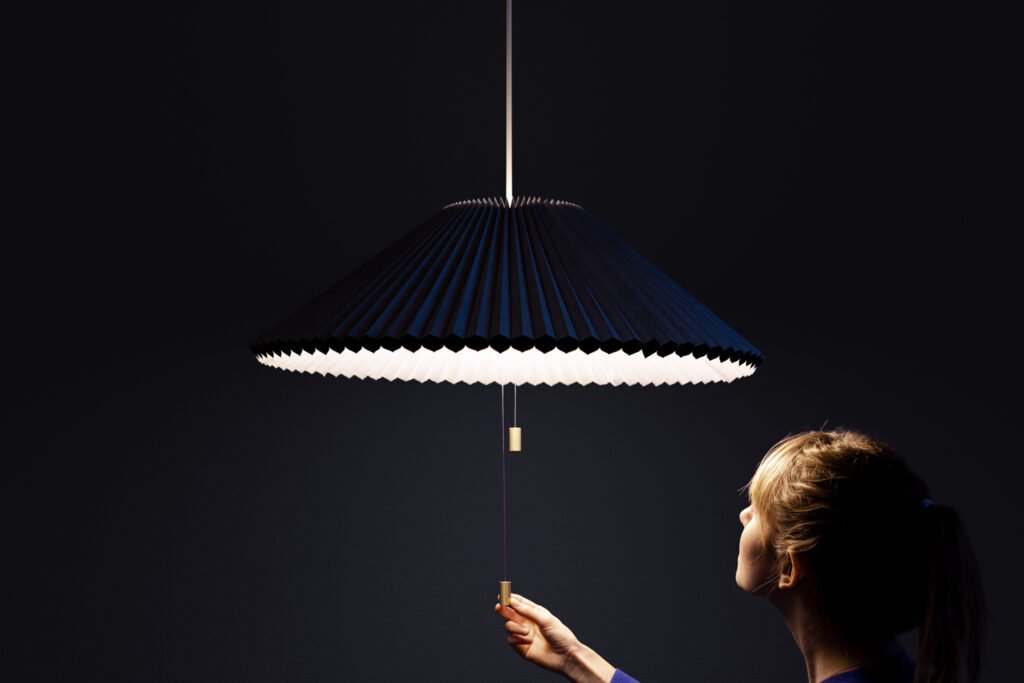
My goal was to create a hanging light fixture with a similar open-and-close mechanism. The Shylight used a series of springs to deploy each arm and a “sheath” to depress each arm. A pulley would drop the frame in and out of the “sheath” to create the blooming action. I wanted to create a pulley system that would allow for the arms to deploy with the pull of a string on the underside of the frame. During my research, I came across Lucas Bazle’s Medusé lamp. I wondered if I could combine the ease of use the Medusé lamp offered with the visual complexity of the Shylight.
I had spent a lot of my time in the course planning my projects before building them, and I wanted to change things up for the final. I decided to try my hand at rapid prototyping. For this, I opted to use Tinkercad because it’s extremely easy to work with and make quick changes to my design. Looking at the mechanisms for opening and closing, the most obvious example was an umbrella mechanism. Using cardboard, a test rig was made to see how the angles of an umbrella’s arm affect its deployment.
With umbrellas in mind, I decided to construct the arms from quarter-inch wooden dowels for their lightweight nature and ease of manipulation. The parts I was left to design were the main hub that would hold all the arms, the slider that would deploy the arms, and attachments that would sit on the arms to guide a cable during deployment.
I ran through several designs for pieces that would attach to the light’s arms. Tinkercad was really helpful for making quick, small changes. One part I struggled with was the end that connects the rod to the lamp’s main hub. The cable I used would easily snag on the piece’s sharp edges, creating friction and a harder pull. To remedy this, I designed a bushing for the cable to sit on and ensured the cable’s angle would go right over it. After making this change, I was able to achieve a smoother deployment. I also struggled with designing the main rail to which the drawstring would attach. While I initially wanted to use a solid rod running through the center, I opted not to because of the weight it would add. Instead, I used four dowels to create a rail for the slider to run along.
After several prototypes and a large energy drink, I began finalizing my design. I added a base to attach LED strips to for the lamp to light up, and added holes in the dowel pieces to sew fabric onto. I sewed a lightweight fabric into a cone-like shape that would bunch up when the arms were closed, and pull tight when deployed.
I ran into the biggest issue of the project after attaching the fabric to the frame I had designed. The frame that had worked without the fabric was now too heavy to deploy open. I worked to remedy this by decreasing the number of arms from eight to four. I had some success, but ultimately, given the design, the feature would not work as intended.
At this point, I had to submit the lamp, and it was still an interesting piece. I designed a base for the lamp to sit on upside down, allowing manual opening and posing of the arms to create a strange floor lamp. While I am proud of the final project, I am a little disappointed that I wasn’t able to get it to work the way I had intended. I hope to return to this project soon to create a more reliable mechanism. I think the first thing to change would be swapping the cable for rigid rod pieces that more closely resemble an umbrella’s structure. Stay tuned…
This project concluded my time in the Interdisciplinary Project Lab. There was a lot to take away from the course, namely, how to develop a workflow for translating across several platforms. Drawings, to CAD software, to fabrication machines, to users, and so on. Thank you to Prof. Moller, and my classmates who helped me along the way.